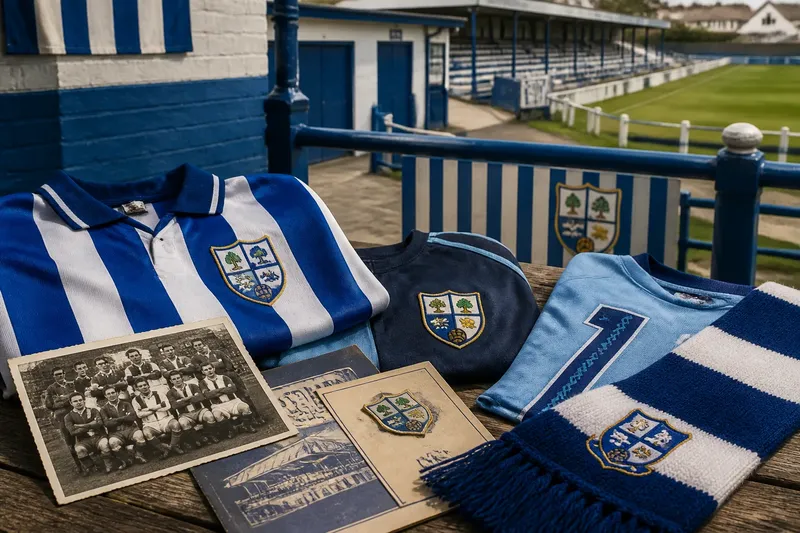
Before the Turnstile: How the Matchday Programme Took Shape
Learn how a matchday programme became both an event guide and a keepsake, and what its changing pages can tell you about a club and its crowd.
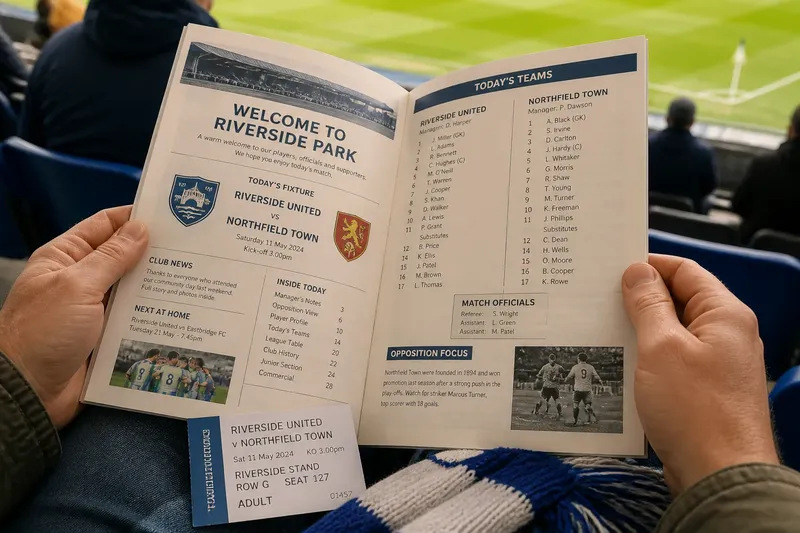
Why do people still pick up a matchday programme when the teams, lineups, and latest news are already on a phone? The printed booklet offers something different: a companion to the event, made to be read in the stands and kept afterward. Its shape grew from a practical need to tell spectators what was happening, then widened to include the people and details that made a particular match worth remembering.
What was a matchday programme for?
At its simplest, a matchday programme helped spectators follow an event. It could name the competing teams, identify players, explain the order of play, and provide information that a crowd could consult without asking an official or waiting for an announcement. In sports with complex rules or unfamiliar participants, that small guide could make the occasion easier to follow.
The precise contents depended on the sport, venue, and audience. A football programme might focus on the two sides and their players; a race meeting could set out a card of events; a tournament booklet might explain its format and introduce several teams. The common purpose was orientation: here is what is taking place, who is involved, and what to look for.
That role made the programme part of the event’s practical infrastructure, though it was never the event itself. Like a map handed to a visitor at a museum, it gave a person a way to make sense of what was in front of them. The comparison has its limits: a programme also belonged to the crowd, passed between hands, and often carried the identity of the host club.
How did its contents grow?
Once a booklet had to be prepared for a particular fixture or meeting, it had room to do more than list participants. Clubs and organizers could include a welcome, team news, notes on the opposition, explanations of rules, or updates from the organization. The match remained the reason to buy it, but the pages gave people more to read before play began and during a pause.
Writing also changed the feel of the object. A bare list of names helps identify players; a short profile can suggest what to watch for in one of them. A note about the visitors supplies context, while a message from an organizer gives the publication a recognizable host. These features turned a functional handout into a small account of how the occasion was being presented.
There was no single template every sport adopted. A programme serving a regular league fixture had different needs from one for a cup tie, a race card, or a multi-day competition. Its useful content followed the questions a spectator was likely to have: who is competing, what is the format, what happens next, and how does this event fit into the season?
Why print it for one event?
A fixture-specific publication could bring information together in one place and make it available at the venue. It could also carry details that were useful precisely because they related to that day: the scheduled contest, the expected participants, the host’s welcome, or a note about the event’s significance. That concentration gave the booklet a clear job, unlike general club material meant to serve throughout the year.
Printing for an occasion also created a natural boundary. The programme belonged to a particular meeting or match, even if its readers took it home. A later issue might cover another lineup and another set of circumstances. Collectors can see that difference in the paper object itself: a date or opponent on the cover anchors it to a moment rather than to the club in the abstract.
That connection did not make every programme a complete record. Team selections can change, schedules can shift, and a printed page reflects what was prepared for distribution, not necessarily everything that happened. Its value is partly in that perspective: it preserves the event as organizers expected to present it before the contest unfolded.
What makes a programme a keepsake?
A keepsake holds onto the feel of an occasion as well as its identifying details. A cover, a fixture name, a venue mark, or a carefully chosen photograph can bring a reader back to the day. Inside, a roster or welcome message preserves the event’s cast and tone in a form that can be revisited after the crowd has gone home.
The most memorable material is not always the grandest. A handwritten note in a margin, a ticket tucked between pages, or a program cover softened from being carried may connect the printed object to someone’s own experience. The booklet does not have to be rare or elaborate to matter; it can be meaningful because it was there when a person watched a particular contest with family, friends, or neighbors.
Imagine a spectator attending an unfamiliar club’s cup match and buying its programme at the gate. Before kickoff, the spectator reads the team names and a short note about the visitors; afterward, the cover stays in a drawer with the ticket. The expected observable result is a modest record that helps recall not only the score, but which teams met and what the occasion looked like from the stands.
What can an old programme tell you?
Start with the information printed for spectators. Team lists, event order, rules, and venue notes show what readers were expected to need. Editorial pages can reveal how a club introduced itself and described its opponents, while advertisements can offer clues about the businesses and services that sought the crowd’s attention.
Design provides another kind of evidence. A cover’s typography, illustration, paper, and arrangement of pages show how the publication was made to be handled and read. Repeated design choices across issues may suggest a stable visual identity; a change in layout can point to a new editorial approach or a different kind of event. It is safer to treat such signs as clues than as proof of why a decision was made.
Printed information also has limits. A roster tells you who was listed, not who ultimately took part. An event preview records expectations, not the full result. Reading the programme alongside a ticket, a scorecard, a newspaper report, or a family’s recollection can give a fuller picture, but each item has its own point of view.
How did programmes differ by sport?
The format followed the rhythm of the event. A spectator at a fixture with two sides might want player identification, form notes, and a view of the opposition. At a meeting with several races or contests, the sequence and participant details could take priority. For a tournament, a bracket, pool arrangement, or schedule might be more useful than a long account of one pairing.
Different sports also asked readers to pay attention to different things. A programme could explain rules that were not obvious from the stands, identify positions, or clarify how a result would be decided. For newcomers, these details offered a way into the event; for regulars, they could serve as a quick reference rather than a lesson.
Even within one sport, audience and occasion mattered. A high-profile final might call for a more extensive publication than a routine fixture, while a local meeting might place special emphasis on community notices or introductions. Those choices were editorial, not universal rules, and they help explain why programmes can look so different despite sharing a name.
Why do fans collect them?
Some people collect programmes to follow a club across seasons; others seek a particular player, venue, tournament, or family connection. The appeal lies in the meeting of printed information and a specific occasion. A run of issues can show how a club presented itself over time, while a single copy may matter because it belonged to an event a collector remembers.
Condition is only one part of that appeal. A clean cover may be attractive, but a well-used copy can have a story of its own, especially if it came from a relative or has a ticket tucked inside. If you are sorting inherited programmes, keep loose inserts with the issue they came from and note any known owner or event information separately, so personal context is not lost as the paper is organized.
When handling a fragile copy, support the pages rather than pulling at a brittle fold, and avoid adding tape or adhesive notes. If an item appears unusually delicate or valuable, a qualified paper conservator or specialist archive can advise on suitable care. For ordinary copies, storing them flat in a clean, dry place away from direct sunlight is a sensible starting point.
Do programmes still matter now?
Digital information can deliver updates quickly, especially when selections or schedules change. A printed programme serves a different purpose: it is a physical publication tied to the event and assembled for a reader to hold. It can include practical information without requiring a screen, while its cover and pages make the day tangible afterward.
Some organizations may choose a digital edition, a smaller print run, or no programme at all. The right choice depends on what spectators need, what the event can produce, and whether people value a printed record. None of those formats automatically makes the occasion more meaningful; the useful question is what information and memory the format lets a reader carry away.
The matchday programme took shape because spectators needed more than a view of the action: they needed names, context, and a way to follow the occasion. Its lasting appeal comes from holding those functions together with a record of one particular event. If you pick one up, look beyond the cover: the names, notes, and small design choices can show how the host wanted that day to be understood—and what it chose to leave in print.